
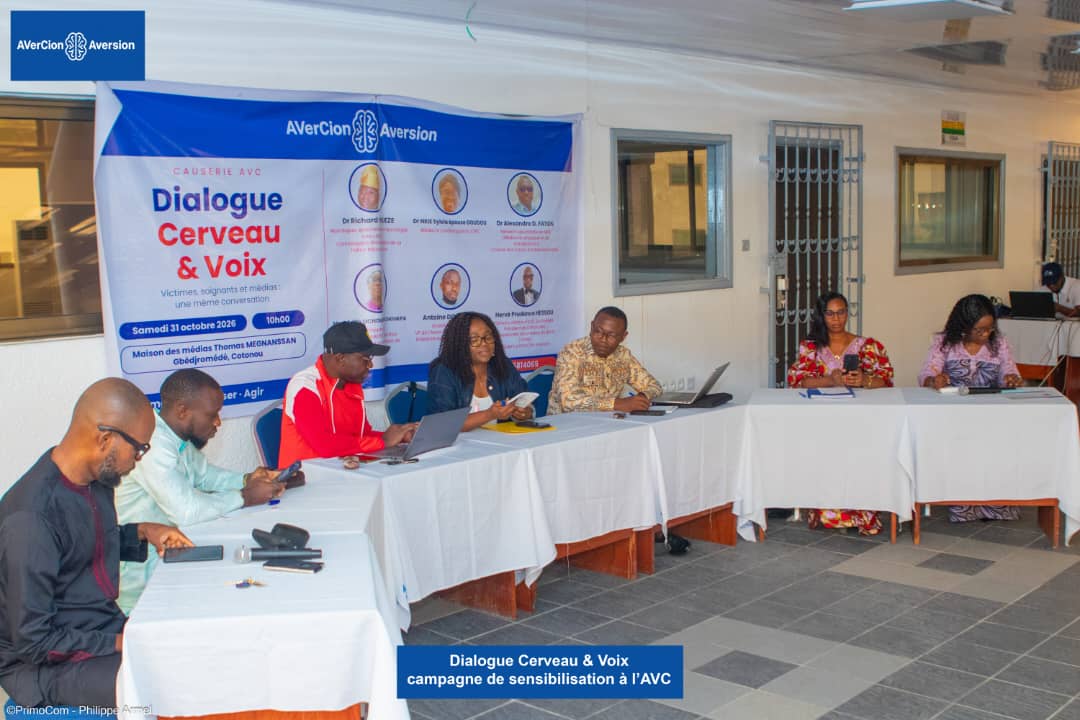
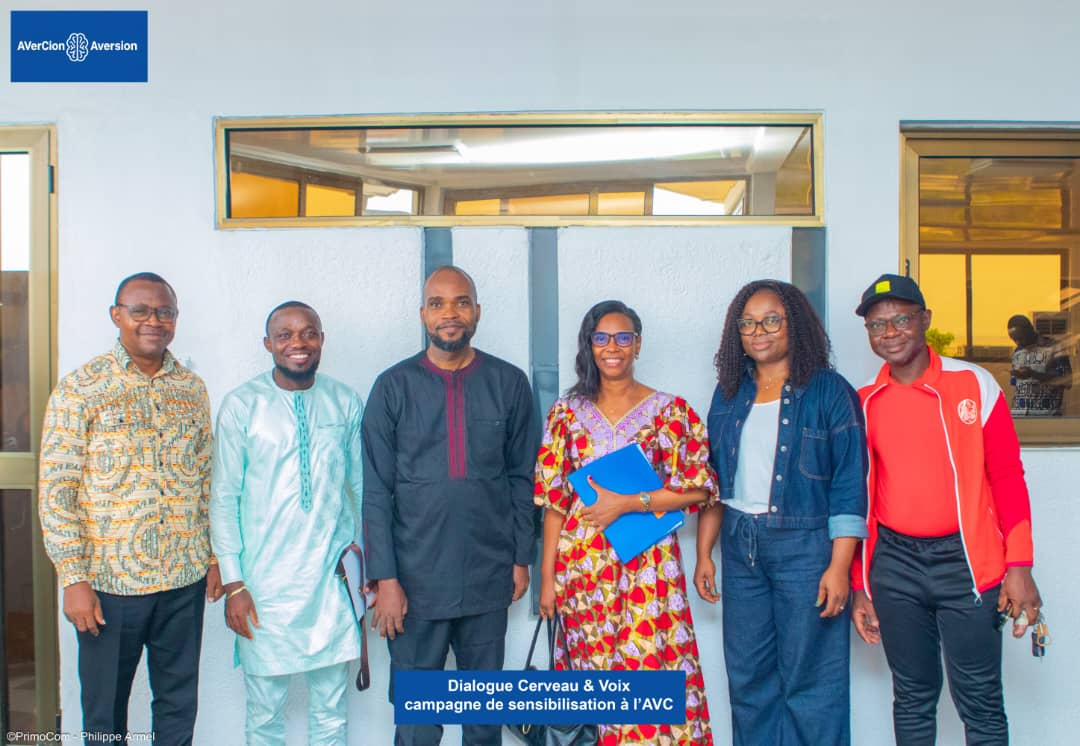
On October 31 at the Maison des médias, the AVerCion Aversion association brought together survivors, specialists and the press for one cause: making stroke everyone's business. A powerful dialogue, driven by the shocking testimony of its president.
It all started with a personal story. That of Hervé Prudence Hessou. On July 29, 2025, while he was near the Ménontin market with colleagues, the president of the UPMB and of the AVerCion Aversion association felt his body give way. Unable to go to the toilet, feeling unwell on his way back, urgently calling his neighbor who is a doctor, then admission to the Ménontin hospital. It was a stroke. By telling this, he summed up the spirit of the day on Saturday, October 31, 2026 at the Maison des médias Thomas Mègnassan Gbèdjromédé: stroke does not warn, it strikes everywhere, and every minute counts. Organized as part of the Awareness Week that started on October 25, this "Brain & Voices Dialogue" had a clear theme: "Victims, caregivers and media: one and the same conversation".
When Experts Decode
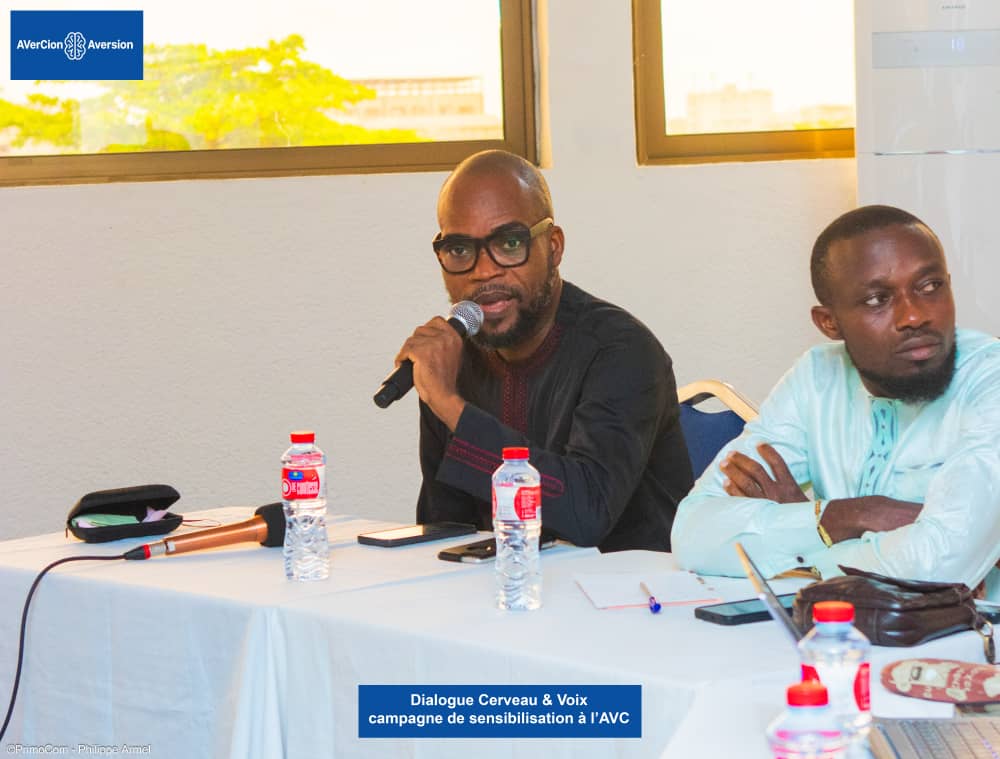
Moderated by health journalist Zakiath Latoundji, former president of the UPMB, five specialists took the floor. Dr. Richard Houézé, vascular neurologist and divisional commissioner of the Republican Police, hammered home the urgency: at the sign of a stroke, emergency services must be called immediately. The CHIC cardiologist, Dr. Nkié Sylvia Goudou, pointed to hypertension, the silent enemy, and recalled that a good diet protects the arteries and stabilizes blood pressure. With a powerful image, Dr. Alexandre D. Faton, specialist in physical medicine and rehabilitation and colonel of the FAB, compared stroke to a water cut in a neighborhood: deprived of water, residents suffer, like neurons deprived of blood. His role: helping motor skills return. Edith Ochoumare Choukpa, speech therapist and treasurer of ABEPO, explained how stroke steals speech and communication, and how they are rehabilitated.
Finally, Antoine Dovonon, physiotherapist and vice-president of ABEKIR, issued a direct warning: stop wasting time with healers and fetish priests, each detour delays hospital care and permanently compromises recovery. Hypertension, diabetes, tobacco, alcohol, sedentary lifestyle: the risk factors were scrutinized before a highly participatory audience.
15 Million Victims Per Year
Why this mobilization? The figures are staggering. The WHO estimates that 15 million people are affected each year worldwide, of whom 6 million die. In Cotonou, a survey conducted on more than 15,000 inhabitants reveals a prevalence of 4.6 per 1,000. Stroke is a public health emergency. For Hervé Prudence Hessou, this fight is personal and professional. "We must communicate and inform about stroke. We think we know it, but it remains little known. Everyone must know what to do at the right time," he insisted. And he added: "I cannot have been a journalist for nearly a quarter of a century, preside over the Union, experience this and remain silent." In the end, only one message remained in the room: stroke can be prevented, recognized and survivors better supported. Provided that victims, caregivers and media finally speak with one voice.